Lesson Plan Library
Our CO2 Learning Center lesson plans all have the same format, which includes learning standards from the Next Generation Science Standards (NGSS), student learning objectives, background information on the science concepts covered in the book or video, suggested activities including labs to enrich the lesson and reinforce use of the scientific method, and formative and summative questions.
The NGSS are the standards on which most public-school systems have based their curriculum. We do not necessarily endorse the NGSS but have included the relevant standards for circumstances in which a teacher is required to use them. The lesson plans contain everything that a teacher might be required to submit in a formal lesson plan to a school administrator or science department head.
Filtering Options
-

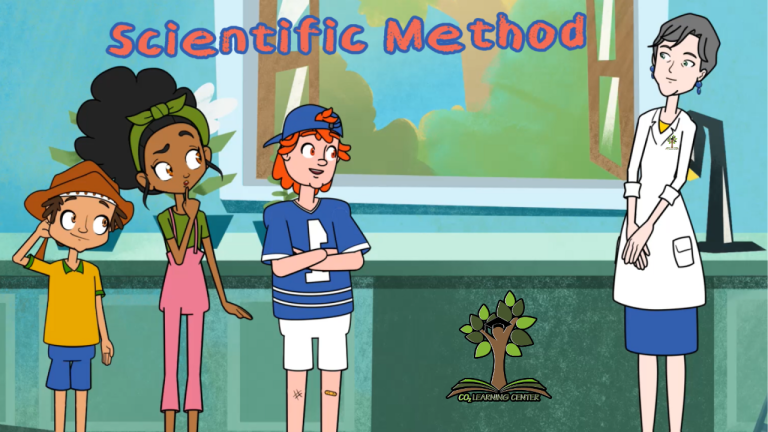
Scientific Method Lesson Plan
This lesson plan accompanies the CO2 Learning Center video, “Scientific Method,” which explains how the scientific method works using an everyday problem the children in the video face.
The video breaks down the process into a series of steps to teach children how to practice critical thinking.
Step 1:
Ask a Question: Identifying a practical problem to solve. In the video, the children ask for the best route to ride their bikes to school.Step 2:
Research & Observations: Looking into reasonable, possible answers.Step 3:
Form a Hypothesis: Making an educated guess on what the best outcome will be.Step 4:
Conduct an Experiment: Collecting complete and accurate information (data). The video explains why physically testing the routes with a stopwatch provides better variables (like traffic and hills) than just looking at a quick and easy map.Step 5:
Draw Conclusions: Analyzing the results with an open mind. They discuss evaluating not just speed, but safety factors like traffic risks.Step 6:
Share Results: Passing on the learned knowledge so others can benefit.Ultimately, the video emphasizes that the scientific method isn’t just for complex science topics—it’s a time-proven tool for critical thinking that can be applied to solve many everyday challenges.
-

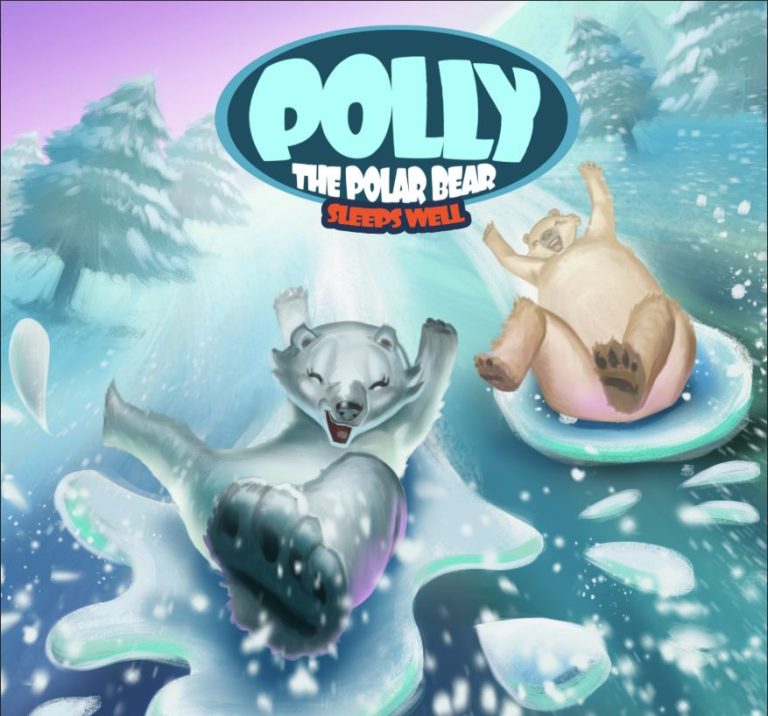
Polly the Polar Bear Sleeps Well
This lesson plan accompanies the book Polly the Polar Bear Sleeps Well, a K–Middle School educational resource produced by the CO2 Coalition’s CO2 Learning Center.
It teaches students polar bear biology, Arctic habitat, adaptations, diet, and reproduction, while deliberately challenging the common narrative that declining sea ice threatens polar bear survival.
It emphasizes empirical evidence showing that polar bears are thriving despite reduced summer sea ice: populations have increased significantly since protective regulations, many subpopulations are stable or growing, bear body condition has improved in key regions, and reduced ice has boosted phytoplankton and the entire marine food chain that supports seals, the bears’ main prey. The lesson contrasts real-world data with less reliable computer model predictions.
Key components include:
Student learning goals focused on polar bear resilience
Detailed scientific background with maps, images, and data
Hands-on activities (fur insulation experiments, climate graphs, water distribution models, data interpretation)
Formative and summative assessments
Alignment with Next Generation Science Standards (NGSS) for grades K–MSThis lesson promotes critical thinking by encouraging students to value measured data over model projections and to understand how polar bears successfully adapt to a changing Arctic.
-

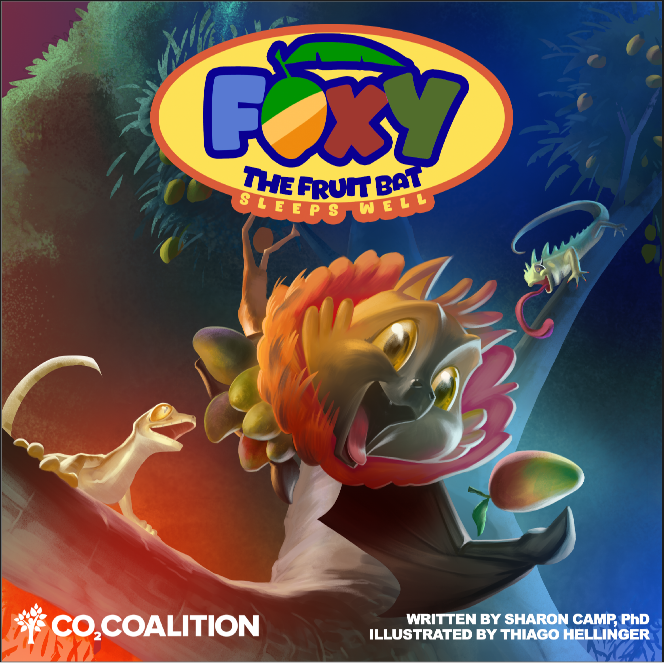
Foxy the Fruit Bat Sleeps Well Lesson Plan
This lesson plan accompanies the book, Foxy the Fruit Bat Sleeps Well. Foxy lives on the islands called the Maldives (pronounced mall-deevz). The Maldives are a large collection of very small coral atolls in the Indian Ocean and, on a map of the world, can be found below the southern tip of India.
Like Foxy and his friends Laila and Ghassan, children around the world have heard that these lovely islands will disappear beneath rising seas because of climate change. But that is just not true. Most of the world’s coral atolls are growing, rising higher and higher rather than getting smaller as sea levels rise. And that’s good news!
Everybody will be glad to hear that Foxy – and all who live on tropical islands – will have homes for many generations to come.
Included in this lesson plan:
student learning goals, background information, references, suggested activities, formative and summative questions, next generation science standards -

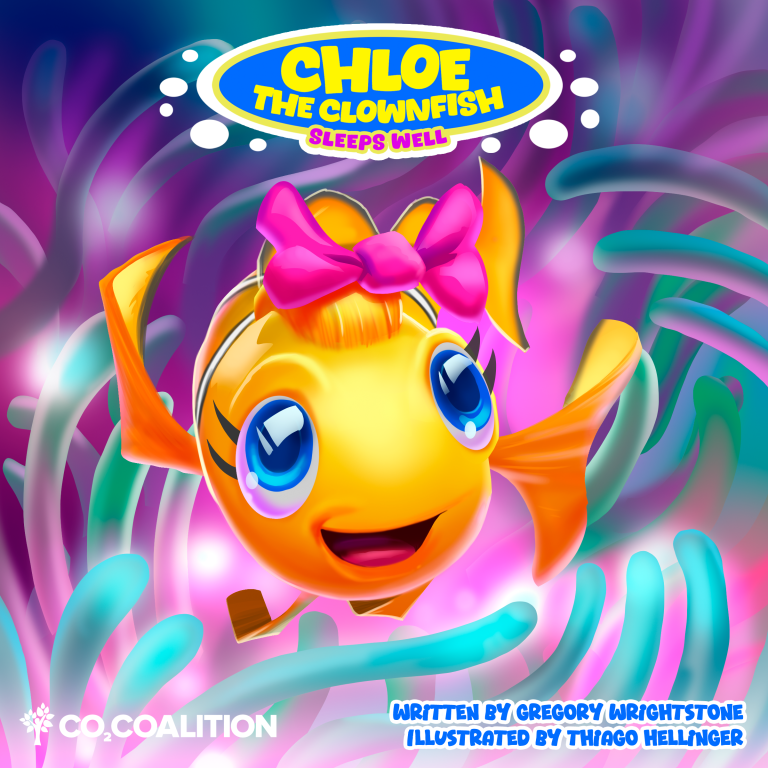
Chloe the Clownfish Sleeps Well Lesson Plan
This lesson plan will assist educators to:
Explain what a clown fish is and where it lives.
Identify what the Great Barrier Reef is and where it is located.
Describe how the temperature of the oceans has changed over the last 100 years.
Locate the Coral Triangle on a map of the world.
Explain how the growth of corals on the Great Barrier Reef has changed since 1985.
Explain why warm oceans are good for coral growth.
Identify whether ocean water is acidic or alkaline.
-

Once Upon A Time Lesson Plan
This lesson plan gives a brief background of CO2 and how plants use the molecule to produce food. Activities include playing with frozen carbon dioxide, exploring how air takes up space, and how to measure CO2 in the air.
-

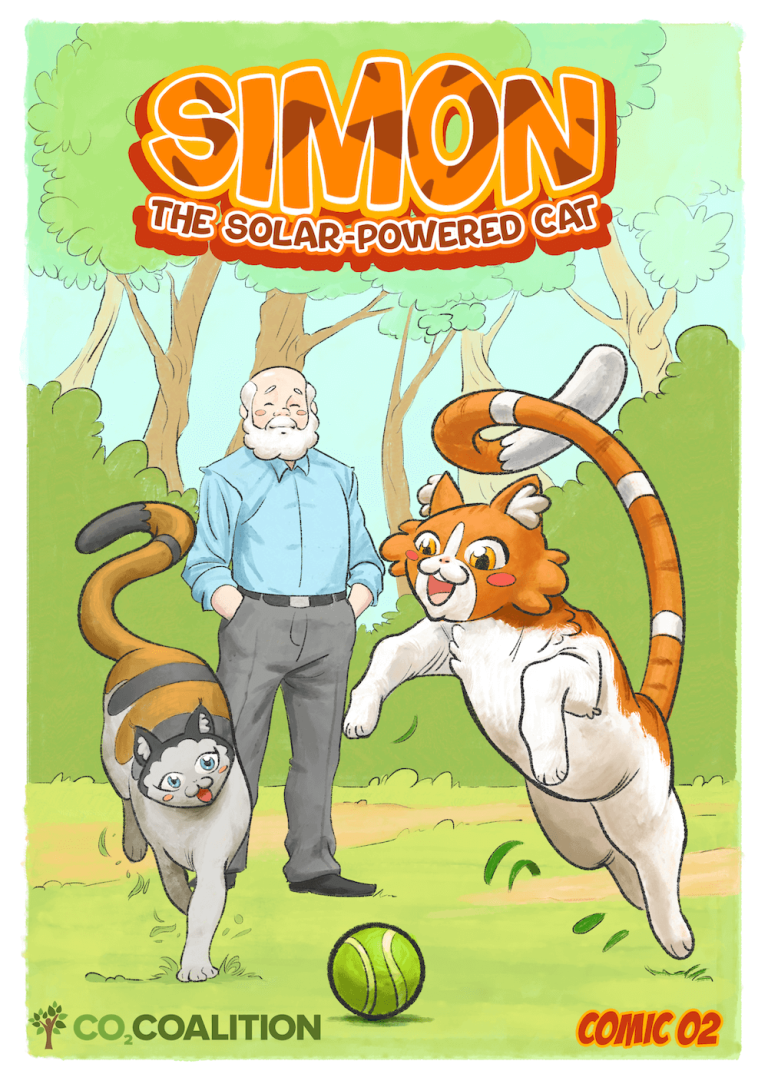
Simon: The Solar-Powered Cat Lesson Plan
This lesson plan explains food chains, photosynthesis, and the carbon cycle. Activities include identifying food chains in nature, measuring food energy, and using chromatography to separate plant pigments.