Polly the Polar Bear Sleeps Well

Polly the Polar Bear calls Norway’s Svalbard Islands home — a rugged realm of snow and ice high above the Arctic Circle, where the Barents Sea meets the Arctic Ocean. For eight months of the year, temperatures stay well below freezing. Each spring, Polly and her kind emerge from their dens to hunt seals on the melting sea ice, feasting through the summer to build up thick reserves of body fat.
One day, Polly’s friend Hilde worried aloud that climate warming would melt so much ice that polar bears would no longer catch enough seals to survive. Polly’s mother smiled and gently explained why that isn’t true. When sunlight reaches open water, it actually boosts the entire food chain, helping seal populations grow and providing even more food for polar bears.
The good news is that polar bear numbers in Svalbard and across the Arctic are thriving. So, Polly drifts off to sleep each night knowing the sea ice will always return in the fall, just as it has for thousands of years.


Other Cool Things

  • Life Loves Warmth

    Life Loves Warmth is a 21-minute video that highlights the critical role of warmth in fostering biodiversity and survival across Earth’s history. From the Devonian’s fish and forests to modern migrations of whales, birds, and manatees, life thrives in warm conditions while cold periods, like the Great Dying or modern winters, pose significant challenges. Humans, like other species, have adapted to seek warmth for survival.

  • How the Energy Grid Works

    Join Ariana, Sophia, Emmit, and their friends as they explore the amazing Energy Grid – the invisible network that brings electricity to our homes, schools, and cities every single day!

    In this fun and easy-to-understand video, the kids discover:

    • How power plants, solar panels, wind turbines, and other sources work together to create electricity
    • What the “grid” really is and why it’s so important
    • How energy moves from where it’s made to where we use it
    • The role of different energy sources – including the benefits of reliable, affordable power for people and the planet
    • Fun facts about how energy connects to the natural world and the miracle molecule CO₂

  • Scientific Method Video - NEW!

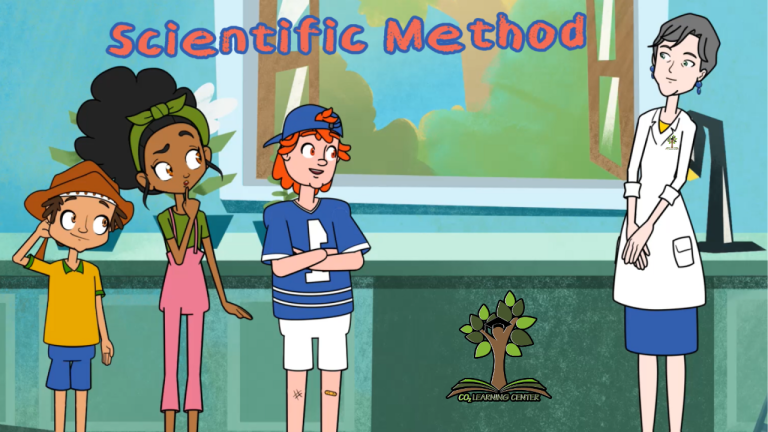
    This CO2 Learning Center video, “Scientific Method,” explains how the scientific method works using an everyday problem the children in the video face.

    The video breaks down the process into a series of steps to teach children how to practice critical thinking.

    Step 1:
    Ask a Question: Identifying a practical problem to solve. In the video, the children ask for the best route to ride their bikes to school.

    Step 2:
    Research & Observations: Looking into reasonable, possible answers.

    Step 3:
    Form a Hypothesis: Making an educated guess on what the best outcome will be.

    Step 4:
    Conduct an Experiment: Collecting complete and accurate information (data). The video explains why physically testing the routes with a stopwatch provides better variables (like traffic and hills) than just looking at a quick and easy map.

    Step 5:
    Draw Conclusions: Analyzing the results with an open mind. They discuss evaluating not just speed, but safety factors like traffic risks.

    Step 6:
    Share Results: Passing on the learned knowledge so others can benefit.

    Ultimately, the video emphasizes that the scientific method isn’t just for complex science topics—it’s a time-proven tool for critical thinking that can be applied to solve many everyday challenges.